Biogas upgrading and injection plants must maintain consistent gas quality while controlling safety risks throughout processing, storage, and transfer operations. Portable gas analysis helps operators check gas composition, identify abnormal conditions, and verify whether process adjustments are producing the expected results.
A portable gas detector supports workplace safety by identifying hazardous gas concentrations, while a portable gas analyzer helps assess process-related gas parameters. Together, these instruments contribute to operational control, equipment protection, and reliable biomethane production.
Why Gas Analysis Matters in Biogas Upgrading
Raw biogas typically contains methane, carbon dioxide, water vapor, and smaller quantities of other components, including hydrogen sulfide. The exact composition depends on feedstock, digestion conditions, and plant operation. Before injection into a natural gas network, biogas generally requires treatment to meet applicable gas-quality specifications.
Upgrading processes remove unwanted components and increase methane concentration. However, variations in feedstock or treatment performance can affect the resulting gas composition. Excessive carbon dioxide may reduce heating value, while hydrogen sulfide and moisture can contribute to corrosion and other operational problems.
Regular gas analysis allows plant operators to evaluate treatment performance and identify changes that require attention. It also supports process optimization by providing information for adjusting purification stages, monitoring equipment, and investigating abnormal operating conditions.
Key Gas Parameters to Monitor
Methane concentration is one of the most important indicators of upgrading performance. Higher methane content generally indicates more effective carbon dioxide removal, although acceptable specifications depend on the receiving network and local regulations.
Carbon dioxide monitoring helps operators evaluate separation efficiency. Hydrogen sulfide is another important parameter because it can cause corrosion and create occupational exposure hazards. Oxygen may also require monitoring, particularly where air ingress could affect gas quality or introduce additional safety concerns.
Water vapor and other impurities may also need assessment, depending on the injection requirements. A portable gas analyzer can help technicians conduct checks at selected process locations, but the instrument must support the required measurement ranges and gas components.
How Portable Instruments Support Plant Operations
Gas monitoring requirements differ between process control and personnel safety. A portable gas detector is primarily used to identify potentially hazardous atmospheric conditions around equipment, inspection points, and maintenance areas.
For example, technicians may use portable instruments when checking digestion facilities, gas storage areas, upgrading equipment, compressor stations, and pipeline connections. These checks can help identify unexpected gas accumulation before maintenance or inspection activities proceed.
A portable gas analyzer serves a different purpose when equipped to measure relevant process-gas components. Technicians can use it to compare gas composition at different stages, investigate variations, and assess whether upgrading equipment is operating as expected.
Neither instrument automatically replaces fixed monitoring or laboratory analysis. Their value depends on selecting appropriate equipment for the measurement objective and following established sampling procedures.
Understanding Sampling and Measurement Reliability
Portable gas instruments commonly use diffusion or pumped sampling. Diffusion-based devices allow surrounding gas to reach the sensing element naturally. This method offers a relatively simple approach for monitoring the atmosphere around a worker.
Pumped sampling actively draws gas into the instrument and may be useful when checking locations that are difficult to access directly. However, the sampling arrangement must be suitable for the gas, pressure, temperature, and operating conditions. Tubing length, leakage, blockages, and sample transport time can all influence results.
Measurement reliability also depends on sensor condition and calibration. Operators should follow manufacturer instructions for calibration, functional testing, sensor replacement, and routine maintenance. Consistent sampling locations and documented procedures make comparisons between measurements more meaningful.
Choosing Suitable Equipment for Biogas Facilities
Selecting equipment begins with identifying the gases that need to be measured and the purpose of each inspection. Buyers should distinguish between instruments designed for combustible gas detection, toxic gas monitoring, oxygen measurement, and detailed process-gas analysis.
A portable gas detector should offer suitable detection ranges, sensor compatibility, clear alarms, and practical operation for field personnel. A portable gas analyzer should provide the measurement capabilities and accuracy required for process evaluation and gas-quality checks.
Procurement teams should also examine enclosure protection, battery performance, calibration requirements, operating temperature, and relevant explosion-protection certifications. Equipment intended for hazardous areas must meet the applicable requirements for its actual operating environment.
Bosean BH-4S for Multi-Gas Monitoring
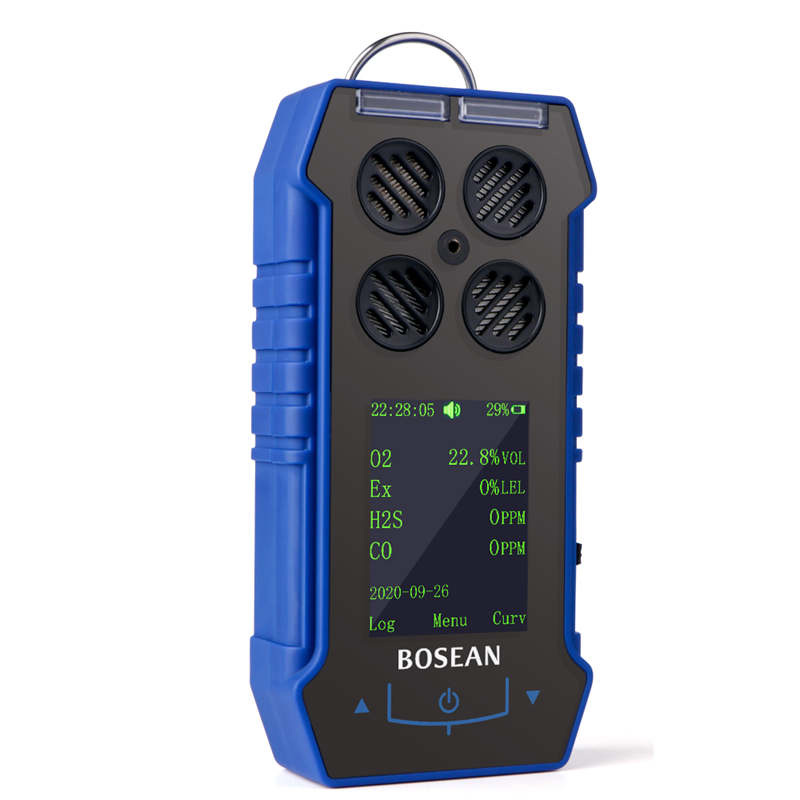
Bosean’s BH-4S 4 in 1 Multi Gas Detector provides a portable option for applications requiring simultaneous monitoring of four gases. It is designed for environments where explosion protection is required or toxic gas leakage may occur, including underground channels and mining applications.
The BH-4S adopts a natural diffusion sampling method and high-sensitivity sensors designed to provide good sensitivity and repeatability. Its 32-bit built-in microcontroller unit (MCU) supports reliability and self-adaptation capabilities.
For biogas facility operators, this instrument may be considered for suitable atmospheric safety checks around relevant work areas. However, its specific gas configuration must be confirmed before deployment. Buyers should verify whether the available sensor combinations match the site’s methane, oxygen, and toxic-gas monitoring requirements. Its specifications should not be assumed to provide detailed biomethane composition analysis.
Integrating Field Measurements Into Plant Management
Portable monitoring becomes more valuable when measurement results are incorporated into routine maintenance and process management. Operators can record inspection locations, readings, environmental conditions, and instrument status to identify recurring variations or potential equipment problems.
Maintenance teams should also establish clear procedures for responding to alarms and abnormal readings. Personnel must understand when to stop work, leave an affected area, and follow the plant’s emergency response arrangements.
Working with an experienced equipment supplier can help organizations evaluate measurement requirements and identify suitable configurations. Technical documentation, calibration support, and maintenance guidance should be considered alongside the initial purchase price.
Improving Biogas Operations Through Better Gas Monitoring
Reliable biogas upgrading and injection depend on effective process control and workplace safety management. Portable instruments support these objectives by helping technicians assess atmospheric hazards and investigate gas composition at selected locations. While a portable gas detector focuses on safety-related gas detection, a portable gas analyzer supports process evaluation when equipped with the appropriate measurement functions. Bosean‘s BH-4S offers a multi-gas monitoring option for suitable applications, helping facility operators consider practical equipment choices within a broader gas-monitoring strategy.
