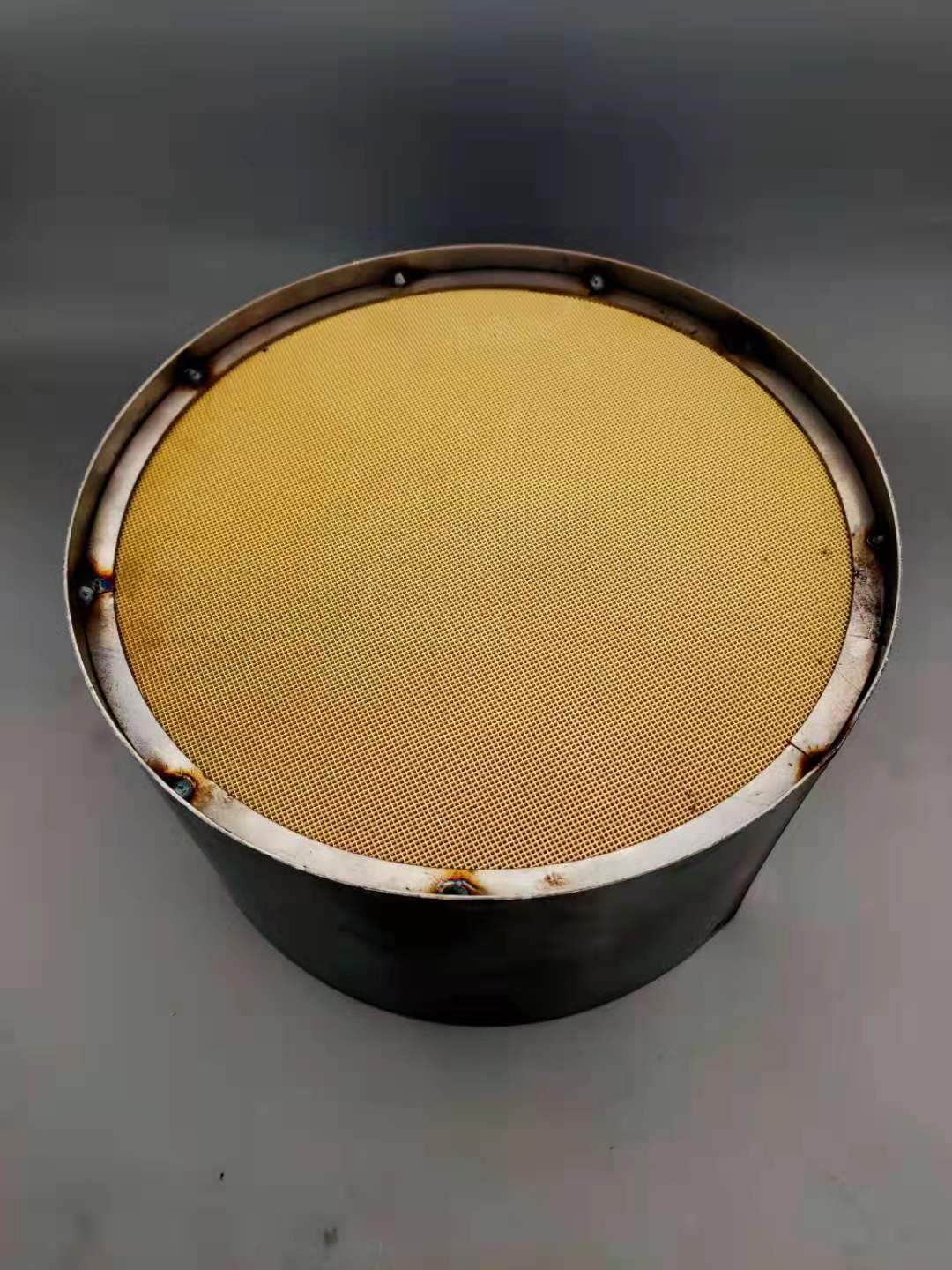
An SCR diesel purchasing comparison can look complete while omitting the measurements that determine whether an SCR element fits an engine. Price, size, and one conversion figure say little about pressure loss, temperature coverage, mechanical strength, or how the tested specimen was made. A vanadium pentoxide catalyst proposal needs a common basis before offers are comparable.
The first step is to define the duty behind the request: NOx inlet conditions, required outlet level, exhaust flow, temperature distribution, packaging envelope, and allowable backpressure. A buyer can then compare candidate configurations against those same inputs. Otherwise, different quotations may describe different substrates, coatings, and test points under the same product name.
Put Reaction and Flow on One Record
Ranking two SCR diesel proposals can change with the chosen operating point. Temperature, measured inlet composition, reductant dosing, and space velocity govern NOx conversion; the NO/NO₂ balance also shifts with load. Comparing curves or a defined set of engine points exposes where each proposal loses activity, rather than assigning an isolated percentage to the entire operating range.
Pressure loss belongs beside conversion, not in a separate brochure line. Length, frontal area, channel density, and coating can change both reaction opportunity and restriction. A more active element may be unattractive if its installed pressure drop exceeds the engine limit. Conversely, very low restriction has little value if the exhaust passes without adequate contact.
The tested article must match the proposed order. A data sheet for a different CPSI, length, coating load, or housing cannot answer whether the quoted part reaches the stated result. Requesting the specimen dimensions and test setup makes any conversion or pressure number traceable. The same rule applies when laboratory samples are scaled to production units.
Examine Durability and Process Consistency
Strength and thermal behavior determine whether initial performance can survive service. Expansion during heating, rapid temperature changes, vibration, and mounting stress can damage channels or active layers.
Vibration and heat-shock resistance, strength, and low thermal expansion address loads in Hualian Catalyst‘s SCR. A buyer needs the associated test method and acceptance limit for the proposed construction.
Water-absorption consistency is another manufacturing indicator in Hualian’s stated set of characteristics. It can matter when a ceramic support receives a coating because variation in uptake may affect how material is distributed. A reported range or batch control method is more informative than an isolated claim of uniformity. The manufacturing record identifies the measured property.
The actual engine environment defines the useful durability evidence, rather than a generic high-temperature label. Thermal cycling, exhaust chemistry, and mechanical loading differ between engines. The relevant question is how conversion, pressure loss, and structural condition look after a defined exposure. Fresh and aged results belong in distinct comparison columns.
A vanadium pentoxide catalyst may be discussed alongside other vanadium-containing products, but product-family resemblance does not provide diesel SCR durability data. The active material, support, coating, and test duty need to match the offered component. Procurement documents can state that boundary directly, preventing a broad material claim from replacing part-specific evidence.
Compare Configurations against the Same Duty
Hualian says SCR dimensions and CPSI can be customized, and its catalyst can be paired with V-based, Cu-zeolite, or Fe-zeolite active systems according to engine and emissions needs. These are configuration choices, not automatic upgrades. Each combination changes the evidence a buyer needs for thermal coverage, conversion, pressure drop, and installed fit.
Hualian’s diesel SCR range lists an approximate 230–470°C temperature window for vanadium-based metal oxide formulations. Other active chemistries occupy different windows. Pressure drop and surface area complete the comparison variables, connecting the chemical range with the physical substrate. The engine’s temperature distribution identifies the intervals requiring examination.
One comparison matrix can hold the engine duty on one side and the candidate’s measured values on the other. Temperature points, NOx conversion, ammonia behavior, flow, pressure loss, dimensions, CPSI, and durability test conditions need shared units and definitions. Missing entries then remain visible instead of disappearing inside a general “high performance” description.
Commercial decisions also depend on whether the tested configuration can be supplied consistently. A sample report, dimensional tolerance, coating specification, and agreed inspection basis connect the performance claim to production.
Customization is useful when those controls remain traceable from engineering approval through delivery. The price comparison then concerns equivalent duties and equivalent evidence.
A request for quotation names the measurement points and conditions for each value. Pressure loss may be reported at different flows; mechanical strength may use different mechanical test specimens; conversion may refer to different inlet NOx levels. Without a shared basis, columns in a comparison table can look aligned while describing unlike tests. The buyer can resolve gaps before judging a price difference.
The strongest SCR diesel offer is the one whose measured behavior answers the stated engine requirement and whose construction can be reproduced. Conversion, resistance, thermal coverage, and physical durability belong in the same evaluation, with each figure tied to a specified sample and test. Across the engine’s temperature distribution, an SCR proposal must sustain NOx conversion without excessive pressure loss.
