In modern dental laboratories, meeting tight clinical deadlines while maintaining strict quality standards remains a constant operational priority. Procurement decision-makers and senior technicians frequently evaluate how production bottlenecks impact overall lab profitability and client satisfaction.
When dental clinics request custom metal frameworks, such as crown copings, bridges, and removable partial dentures, outsourced manufacturing may involve additional file transfers, shipping, and production scheduling, while in-house casting has its own processing requirements. Transitioning to additive manufacturing offers a viable, efficient pathway to streamline internal operations, reduce delivery times, and enhance overall workflow productivity.
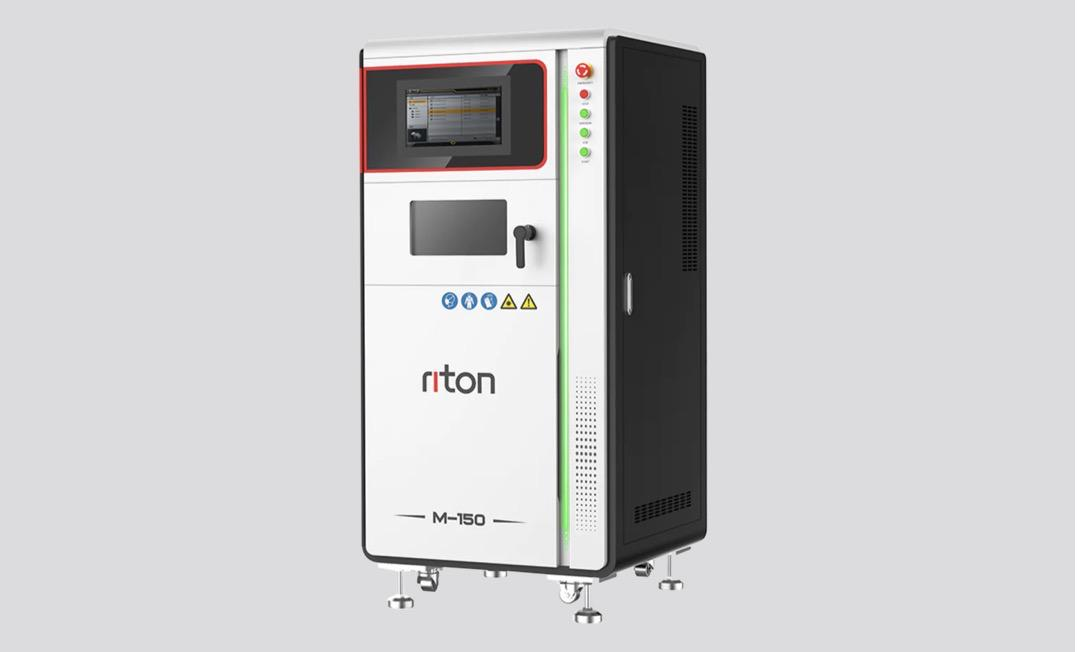
Riton provides dental 3D printing equipment, digital tools, and technical support for dental laboratories. Drawing on nearly 30 years of laser expertise and early pioneering involvement in dental metal 3D printing research and development, they help laboratories modernize their production floors.
Overcoming Production Bottlenecks in Dental Workflows
A common question raised by laboratory managers exploring facility upgrades is: How does bringing metal production in-house directly reduce turnaround times for urgent crown and bridge cases?
In a traditional outsourcing model, technicians must send digital scan files to an external milling or printing center. Any required margin adjustment, digital rescan, or file re-submission can add days to the final delivery schedule, creating friction with partner clinics. By contrast, managing metal manufacturing locally gives lab teams direct oversight over every job queue, eliminating dependency on third-party shipping schedules.
Consider a mid-sized dental laboratory handling multiple parallel cases of cobalt-chromium frameworks daily. In a real-world production scenario, an incoming rush order for an implant superstructure requires immediate nesting and printing to meet a patient’s surgery schedule. With an internal additive manufacturing setup, operators can instantly process the CAD files, initiate the build job, and transition directly to subsequent post-processing stages. This direct control can reduce the need to ship production files or workpieces to external manufacturing centers and give laboratories greater control over delivery schedules.
Harnessing Advanced Hardware for Continuous Operation
Selecting the right hardware is crucial for laboratories seeking to maintain consistent output without frequent maintenance interruptions. Technicians frequently ask: What specific technological factors ensure that additive manufacturing systems maintain steady performance across continuous multi-shift production cycles?
The foundation of rapid and reliable metal production lies in advanced selective laser melting technology. Systems integrated into digital dentistry 3D printing workflows utilize stable single-mode fiber laser sources to deliver precise energy distribution across the powder bed. Appropriate laser parameters help control powder melting and layer bonding, while the final density and mechanical properties depend on the material, printing conditions, and post-processing.
Additionally, modern equipment incorporates intelligent design features to minimize operator intervention between successive build runs. For example, compact machine architectures featuring automatic gas and oxygen control systems regulate the internal atmosphere efficiently, reducing preparation time before each print cycle.
Magnetic build plates allow for rapid component removal and resetting, enabling technicians to clear workspace areas and start subsequent batches with minimal downtime. These engineering refinements contribute directly to field-proven stable performance, ensuring that equipment operates reliably during peak weekly workloads without unexpected overheating or calibration drift.
Streamlining Fabrication with a Modern laser metal 3D printer
Productivity in metal additive manufacturing depends heavily on how smoothly a professional laser metal 3D printer integrates with daily laboratory routines and scheduling requirements. When evaluating hardware options, procurement teams look closely at powder management, material versatility, and spatial footprint.
These systems designed for dental applications support widely used biocompatible materials such as cobalt-chromium and titanium powders, accommodating diverse clinical indications from single anatomical units to extensive partial denture frames. In daily practice, laboratory technicians may process titanium implant bars and cobalt-chromium copings in separate production runs, following the required powder changeover, equipment cleaning, and parameter verification procedures.
Optimized powder spreading and appropriate software settings support the printing process, while material changeovers require separate cleaning and parameter checks.
Moreover, the physical layout of the equipment matters significantly in busy laboratory environments where floor space is at a premium. Compact machine footprints allow facilities to integrate printing units seamlessly alongside existing digital scanning and sintering equipment without requiring extensive facility restructuring. By pairing high-precision laser sources with efficient build volumes, labs achieve high productivity rates per batch, successfully fulfilling large daily quotas without compromising structural integrity or fine anatomical precision.
The Value of a Comprehensive Support Ecosystem
Hardware reliability represents only one critical component of successful in-house manufacturing. Long-term productivity also depends on robust technical backing and software integration. Laboratories benefit immensely from a cohesive “equipment + platform + service” digital ecosystem that unifies design data, slicing parameters, and machine monitoring into a single streamlined workflow.
When technicians encounter unfamiliar alloy batches or complex geometric designs during daily operations, having access to specialized dental technical support ensures prompt problem resolution and optimized printing parameters.
Furthermore, responsive after-sales service and global agent-backed local service networks provide essential security, minimizing unexpected operational downtime across multiple production cycles. By combining nearly three decades of laser innovation with dedicated customer support, manufacturing partners empower dental laboratories to accelerate production workflows, elevate service quality, and maintain a strong competitive edge in an increasingly digital marketplace.
