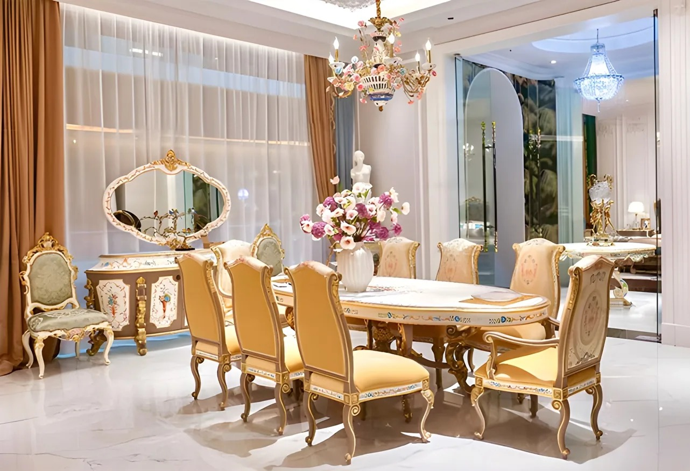
Sprawling private estates and luxury villas present distinct architectural conditions that standard residential furnishings often struggle to address. Soaring ceiling heights, expansive floor plans, and massive glass curtain walls require thoughtful spatial planning. Without proper proportioning, retail pieces can appear lost within grand rooms.
Achieving a harmonious aesthetic throughout a large property demands a clear understanding of scale, material continuity, and functional zoning. Specifying appropriate luxury villa furniture helps bridge the gap between monumental architecture and comfortable daily living across diverse interior zones.
Defining Core Aesthetic Directions for Modern Villas
Curating a villa interior begins with establishing a cohesive design language. While individual rooms serve different functions, maintaining consistent stylistic threads throughout the residence helps prevent the interior from feeling fragmented or disjointed.
Contemporary minimalism continues to evolve into warmer, more organic expressions. Neutral color palettes paired with heavily textured fabrics, live-edge timber, and natural stone help soften clean architectural lines. This approach enables large living spaces to feel welcoming rather than cold.
Classic European elegance offers an alternative direction for traditional estate architecture. Detailed woodwork, carved stone accents, and rich upholstery support a sense of heritage. Softening traditional profiles with modern layouts helps maintain relevance without sacrificing architectural grandeur.
Material Selection and Structural Durability
Material selection plays a critical role in how villa furnishings perform over time. Expansive windows expose interior pieces to continuous sunlight, while indoor-outdoor transitional zones require resistance to humidity and temperature fluctuations.
The selection of UV-resistant fabrics, treated hardwoods, and non-porous stone is designed to ensure the finishes last for years. Because these resilient materials are used in custom chairs, dining tables, and cabinetry, the furniture maintains its original appearance even when exposed to strong sunlight, humidity, and temperature fluctuations.
Partnering with experienced manufacturers such as BFP Furniture enables procurement teams to access specialized material treatments tailored to specific climatic conditions. This expertise aids in maintaining material stability across both coastal and desert estate locations.
Selecting Custom Furniture for Luxury Villas
Off-the-shelf retail collections frequently fall short when fitting custom architectural niches or oversized great rooms. Tailoring dimensions, upholstery finishes, and internal frames supports precise alignment with complex floor plans and unique spatial layouts.
Utilizing custom furniture for luxury villas allows interior architects to create bespoke focal points, such as grand sectional sofas or monolithic dining tables. Custom tailoring supports fluid traffic movement while maintaining appropriate visual weight within high-ceiling environments.
Custom-made furniture can seamlessly integrate modern technology into the furniture itself, achieving a low-key and unobtrusive look. Concealed wiring channels, integrated ambient lighting, and motor-assisted storage elements support clean visual lines without compromising the underlying aesthetic concept.
Harmonizing Indoor and Outdoor Living Zones
Modern villa architecture emphasizes seamless connections between interior lounges and exterior loggias. Transitioning between indoor living rooms and covered patios requires careful coordination of design motifs and color schemes across both areas.
Outdoor lounge furniture should offer refined comfort comparable to indoor pieces. Utilizing quick-dry foam cores, solution-dyed acrylic fabrics, and powder-coated aluminum frames supports weather resistance while maintaining a sophisticated visual profile.
Aligning outdoor furniture layouts with interior views helps establish continuous sightlines across the property. This visual continuity expands the perceived living area and reinforces a unified estate aesthetic from every vantage point.
Spatial Planning and Layered Lighting Integration
Large room footprints require strategic furniture placement to define distinct functional zones. Grouping seating arrangements around fireplaces, media centers, or architectural views helps establish intimate conversation pockets within expansive open‑concept halls. Without thoughtful zoning, these large‑scale spaces can feel disjointed, leaving guests without clear, comfortable areas for socialising or quiet relaxation.
Incorporating varied furniture heights and mixed material silhouettes adds depth to wide spatial planes. Combining low‑profile lounge seating with tall console tables and sculptural accent chairs helps break up visual monotony across massive floor plans. Careful height variation also guides guest movement naturally, subtly drawing attention toward focal points such as panoramic windows or statement interior features.
Fusing custom millwork with integrated lighting elements enhances spatial depth during evening hours. Under‑cabinet illumination, backlit stone features, and soft ambient channels support an inviting atmosphere across primary entertaining suites. These layered light sources soften hard surfaces and reduce the risk of cold, flat‑looking interiors after dark, while preserving the original design intent of the custom joinery.
Streamlining Procurement and Quality Verification
Managing furniture acquisition for a sprawling multi-room estate requires rigorous oversight and clear technical specifications. Working with detailed shop drawings, material finish samples, and structural mock-ups aids in verifying proportions before full manufacturing begins.
Thorough quality checks during production help prevent installation delays on-site. Verifying frame integrity, joinery precision, and fabric stitching supports efficient delivery schedules and reduces the risk of post-installation adjustments.
When the procurement process is closely synchronized, project managers can bring complex design concepts to fruition, reducing unnecessary efficiency losses. It aligns design requirements, sample validation, manufacturing timelines, and site‑installation workflows, lowering the risk of costly delays or specification mismatches along the project lifecycle. Selecting crafted, purpose‑built furnishings supports the creation of balanced, enduring, and deeply refined residential environments.
These tailored pieces balance aesthetic expression with real‑world durability, adapting to heavy daily use while preserving the consistent design language expected within high‑end residential and hospitality‑infused living spaces.
