Long-distance fiber links must carry increasing traffic through infrastructure that is expensive to expand. When they evaluate capacity options, coherent transmission stands out because it preserves information about optical amplitude, phase, and polarization.
This allows a receiver to distinguish more complex symbols and use each wavelength more efficiently than a basic intensity-link. The improvement comes from a complete architecture rather than one component. A narrow-linewidth laser, precise modulator, coherent receiver, analog front end, and digital signal processor must operate together.
They therefore judge coherent performance by reach, capacity, spectral efficiency, power, and operational stability instead of treating the modulation format as an isolated technical feature.
Specialized photonic applications make coherent optical systems practical for metro and long-haul networks by providing faster electro-optic control, lower optical loss, and multi-channel integration. These capabilities help system designers preserve signal quality before digital processing compensates for dispersion and other impairments accumulated along the fiber.
Recovering More Information from the Optical Field
A coherent receiver mixes the incoming signal with a local optical oscillator. This process recovers phase and amplitude information that direct detection does not retain. They can then use modulation formats that encode multiple bits per symbol, while polarization multiplexing allows two data streams to occupy the same wavelength without requiring two separate fibers.
In its platform description, Liobate emphasizes high bandwidth, good linearity, and low insertion loss. In photonic applications, those properties help create accurate complex waveforms and protect the optical power budget.
Linearity matters because distortion at the transmitter can spread into the constellation and reduce the margin available for transmission and digital recovery. Coherent optical systems also benefit from digital compensation.
The receiver can address chromatic dispersion, polarization changes, and selected nonlinear effects through algorithms, reducing reliance on fixed optical compensation modules. They still need controlled transmitter behavior, because digital processing cannot recover information that was distorted or lost before the signal entered the fiber.
The additional dimensions of the optical field also give network operators more choices when traffic patterns change. Modem settings can trade spectral efficiency against reach, allowing one hardware platform to serve several route classes. They value this flexibility when it is supported by tested operating modes and clear performance boundaries.
Combining Modulation, Detection, and Digital Processing
For long-distance operation, wavelength efficiency is a practical advantage. DWDM places many carriers in one fiber, and coherent formats increase the capacity of each carrier.
They calculate channel spacing, baud rate, filter response, optical signal-to-noise ratio, and guard bands together so that higher spectral density does not create unacceptable crosstalk or filtering penalties.
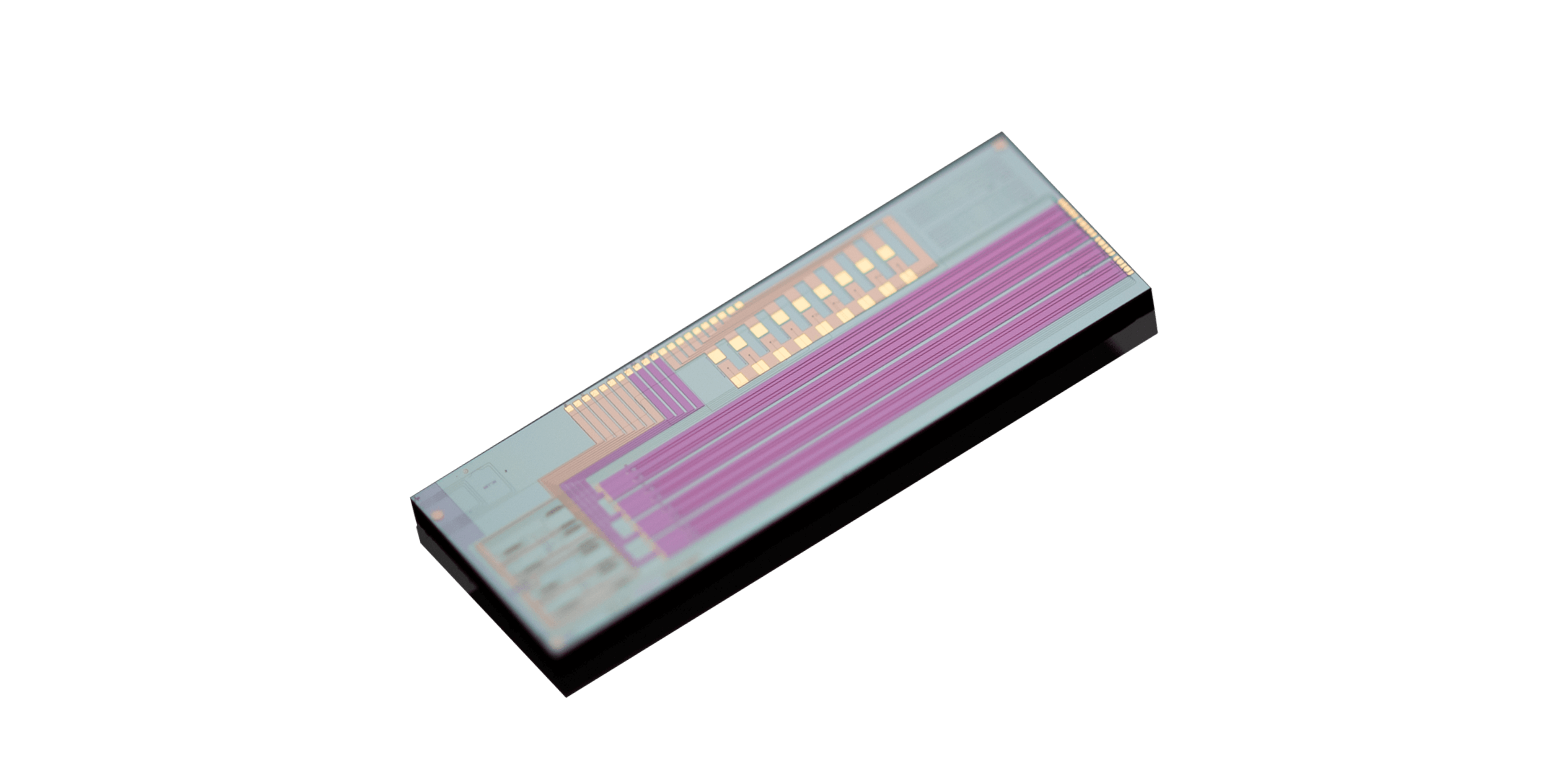
The Liobate applications material says its modulator chips can support 400G and 800G coherent telecom transceivers. These photonic applications illustrate the need for bandwidth and low loss at the same time.
Faster channels require broad electrical response, while long links need enough optical margin to tolerate multiplexers, amplifiers, spans, connectors, and receiver requirements. The transmitter inside coherent optical systems is often an IQ or polarization-multiplexed structure with several matched paths.
Channel skew, phase error, extinction ratio, and bias stability all influence constellation quality. They request multi-channel data and package-level measurements because a single-arm specification does not capture the behavior of a complete coherent transmitter.
Planning Long-Reach Deployment with Realistic Margins
Deployment planning starts with the target route. Fiber type, span length, amplifier spacing, available spectrum, traffic growth, and existing line systems define the viable options. They model these conditions before choosing modulation order, because a format that increases laboratory capacity may deliver less operational margin on an older or more variable field network.
Coherent optical systems also introduce power, cooling, and software considerations. Photonic applications must be reviewed alongside digital signal processors, control firmware, diagnostics, and network management.
They include these elements in total cost because the module cannot deliver its theoretical advantage unless it can be provisioned, monitored, and maintained by the operating team. Within a transmitter qualification, they can assess Liobate where TFLN bandwidth and loss may support the selected roadmap.
They would qualify optical loss, electro-optic response, voltage, channel balance, bias behavior, and environmental stability in the intended package. This provides evidence that the component can maintain performance across manufacturing and field conditions. Field data should feed back into later designs.
They track error trends, optical power, temperature, and alarm history across routes, then compare them with laboratory assumptions. This evidence helps them refine margins and distinguish component limitations from fiber or operational effects before planning the next capacity increase. Supply risk should be planned early.
Coherent equipment depends on specialized lasers, modulators, detectors, converters, and processors, and any constrained part can delay a platform. They look for capacity plans, change control, traceability, and technical support that match the expected product lifetime rather than an early engineering build.
They avoid treating coherent transmission as the answer for every distance. Direct-detection designs remain efficient for many short links, while coherent architectures earn their place where reach, wavelength utilization, or operational flexibility justifies the additional complexity. Segmenting the network keeps the design proportionate and protects capital investment.
Laboratory measurements, route trials, and operational checks answer different questions about a coherent link. Placing Liobate components through that sequence gives engineering and sourcing teams a common record of waveform behavior, packaging risk, and supply readiness.
