Digital technology is transforming the dental industry by improving diagnosis, treatment planning, and restoration workflows. Compared with traditional impression methods, digital dental scanning offers dentists and laboratories a faster way to capture detailed oral structures and transfer accurate 3D data. As more clinics adopt a digital dental solution, many professionals are asking whether digital scanning can provide better accuracy and reliability for clinical applications.
Why Digital Dental Scanning Is Becoming More Accurate?
Traditional dental impressions rely on physical materials that can be affected by factors such as material shrinkage, deformation, storage conditions, and manual handling. These variables may influence the final model quality before restoration fabrication begins.
Digital dental scanning removes many of these physical limitations by using optical scanning technology to capture teeth, soft tissues, and occlusal relationships directly. The scanner creates a digital 3D model that can be reviewed, adjusted, and shared immediately between dental clinics and laboratories.
However, accuracy does not depend only on the scanning device itself. The entire workflow, including scanning technology, software processing, operator experience, and restoration design, contributes to the final treatment outcome.
Modern intraoral scanners use advanced optical technologies such as structured light and intelligent algorithms to collect high-resolution surface information. These technologies allow clinicians to capture complex dental anatomy with improved consistency and efficiency.
How a Digital Dental Solution Improves Clinical Accuracy?
A complete digital dental solution connects multiple stages of dental treatment, from data acquisition to design and manufacturing. Instead of managing separate processes, dental professionals can create a smoother digital workflow that improves communication and reduces unnecessary manual steps.
Key advantages of digital workflows include:
l Better data management: Digital scan files can be stored, reviewed, and transferred without physical model damage or loss.
l Improved communication: Dentists, dental technicians, and patients can visualize treatment plans using 3D models.
l Faster adjustments: If additional information is required, clinicians can rescan specific areas instead of repeating the entire impression process.
l Consistent production: Digital data supports CAD/CAM design and 3D printing workflows for restorations and appliances.
For clinics and laboratories looking to improve efficiency, adopting a digital dental solution can help create a more predictable treatment process.
SHINING 3D Dental Technology Supports High Precision Scanning
As a company specializing in digital dentistry technologies, SHINING 3D Dental provides integrated solutions covering intraoral scanning, dental design, and 3D printing workflows. Its products are designed to support clinics and laboratories that require accurate digital data capture and efficient production processes.
The Aoralscan series is one of the key product families offered by SHINING 3D DENTAL. These intraoral scanners are developed for applications including general restorations, implant workflows, orthodontics, veneers, and removable dentures.
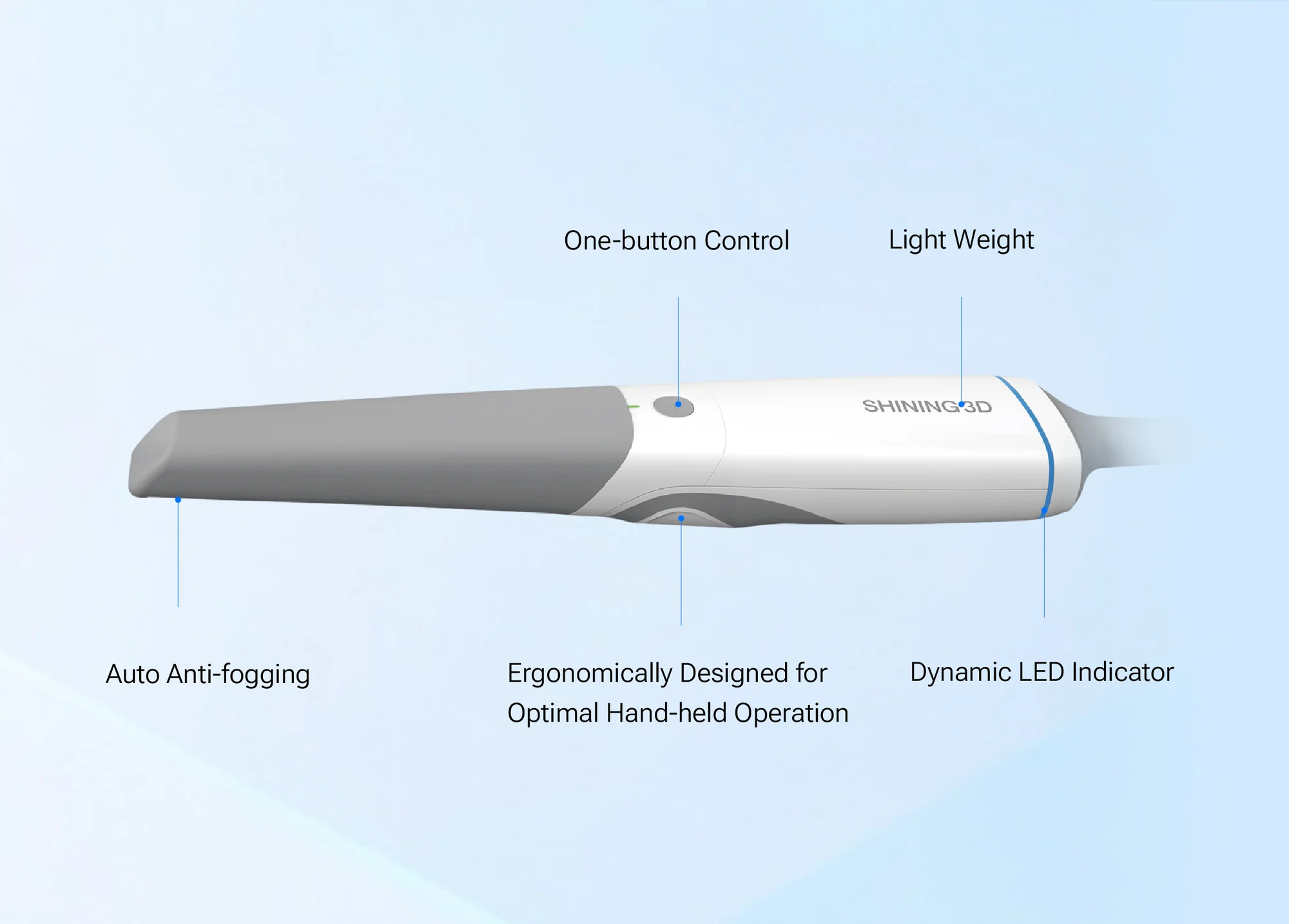
For example, the Aoralscan 3 intraoral scanner uses structured light scanning technology and provides digital outputs in STL, OBJ, and PLY formats. Its specifications include a standard scanner tip size of 16 mm × 12 mm × 22 mm, a mini scanner tip size of 12 mm × 9 mm × 22 mm, and a lightweight design of approximately 240 ± 10 g without cables.
These features allow dental professionals to capture digital impressions efficiently while maintaining a comfortable scanning experience. The scanner can support multiple clinical indications, including implants, orthodontics, inlays, onlays, veneers, and pediatric applications.
Does Digital Scanning Replace Traditional Impressions Completely?
Although digital dental scanning provides significant advantages, it does not mean every traditional method has disappeared. Certain complex clinical situations may still require specific approaches based on dentist preferences, patient conditions, or treatment requirements.
The accuracy of a digital scan also depends on proper scanning techniques. Factors such as maintaining complete surface coverage, controlling moisture, and following recommended scanning paths can influence the quality of the final digital model.
For this reason, professional training remains important. Even advanced scanning equipment requires skilled operation to achieve the best results.
The Role of AI and Software in Digital Scanning Accuracy
One major reason digital scanning continues to improve is the development of intelligent software. Modern scanners combine hardware performance with advanced processing functions that help identify scanning information, optimize images, and improve workflow efficiency.
Software tools can assist dentists by providing real-time visualization and helping detect incomplete scan areas. This reduces the chance of missing important details during the scanning process.
A complete digital dental solution also connects scanning software with design and manufacturing systems. This integration allows dental professionals to move from digital impressions to final production more efficiently.
Why More Dental Professionals Choose Digital Workflows?
The increasing adoption of digital dentistry is driven by the need for greater efficiency, improved patient experience, and more predictable treatment results. Digital scanning provides patients with a more comfortable alternative to conventional impression materials while giving professionals access to reusable digital data.
For dental clinics and laboratories, investing in technologies from SHINING 3D DENTAL can support a modern workflow that combines scanning, design, and manufacturing capabilities. By creating a connected digital dental solution, professionals can improve collaboration and deliver high-quality dental services.
Conclusion: Is Digital Dental Scanning More Accurate?
Digital dental scanning has become a reliable technology for modern dentistry because it offers precise data capture, efficient workflows, and better digital communication. While accuracy depends on equipment, software, and operator skills, advanced intraoral scanners provide dental professionals with reliable tools for predictable treatment planning.
With solutions such as the Aoralscan series, SHINING 3D DENTAL continues to support the development of digital dentistry by helping clinics and laboratories adopt efficient and accurate digital workflows. For professionals seeking a complete digital dental solution, digital scanning represents an important step toward the future of dental care.
