Choosing a 3D printing process is not about identifying one technology best for every prototype. SLA, SLS, and FDM build parts in different ways, creating different trade-offs in surface quality, material behavior, geometry, support requirements, and cost. The right choice depends on what the printed part needs to prove.
APT-Mold publishes plastic additive-manufacturing guidance for prototyping and low-volume production and specifically explains SLA and SLS within its current service information. FDM is included here as a common industry comparison process; availability for a specific APT-Mold project should be confirmed during quotation rather than assumed.
How SLA, SLS, and FDM Build Parts Differently
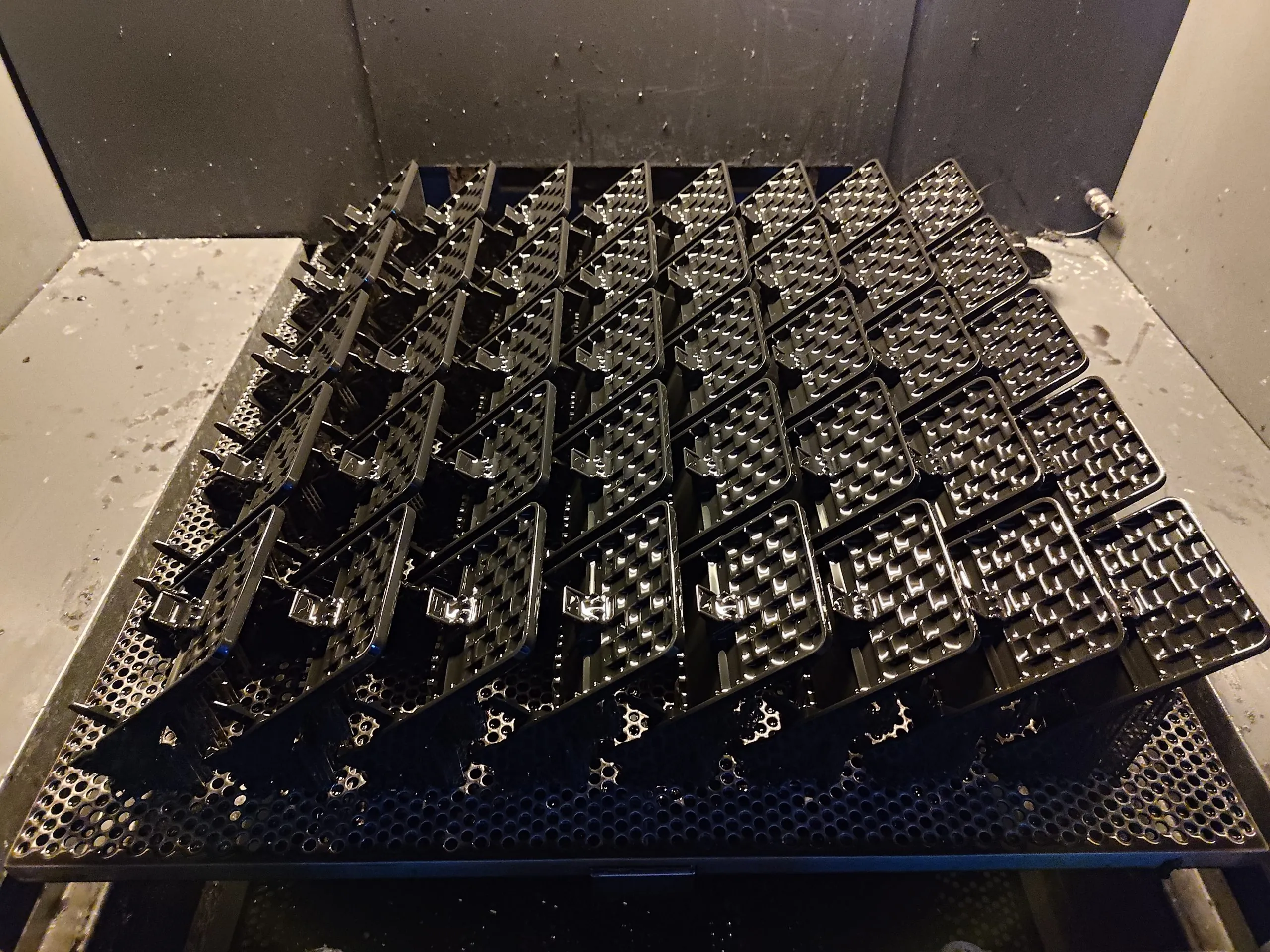
SLA, or stereolithography, cures liquid photosensitive resin with a light source to form solid layers. It is widely used where fine features, smooth surfaces, and visual detail matter. Parts normally require post-processing after printing, including cleaning and curing.
SLS, or selective laser sintering, uses a laser to fuse polymer powder. Because the surrounding powder supports the part during the build, SLS can produce complex geometries without the same type of dedicated support structures used by many other printing methods.
The resulting surface is typically rougher than that of SLA parts, while the parts are often better suited to functional handling.
FDM, or fused deposition modeling, extrudes melted thermoplastic through a nozzle and deposits it layer by layer. It is common for concept models, fixtures, large prototypes, and functional checks where material choice, speed, or cost may matter more than a highly refined surface.
Those process differences shape what each prototype can represent.
Compare the Process With the Question the Prototype Must Answer
A useful 3D printing process decision starts with the validation goal rather than the machine name.
| Process | Typical strength | Main planning consideration |
| SLA | Fine detail and smooth visual surfaces | Resin behavior and post-curing need to suit the test |
| SLS | Functional geometry and powder-supported complex shapes | Surface is generally more textured than SLA |
| FDM | Accessible thermoplastic prototyping and larger functional models | Layer lines, anisotropy, and support strategy may affect results |
An appearance model may favor SLA because visual detail and surface refinement are central to the review. A functional housing or complex duct may point toward SLS when toughness and geometry matter more than a polished surface.
FDM may be appropriate for early fixtures, concept parts, or functional models when the selected thermoplastic and build characteristics are representative enough for the intended test.
None of these examples replaces a project-specific review. A prototype used for repeated assembly, heat exposure, or structural testing needs different evidence from a model created only for a design meeting.
Material Choice Can Change the Process Decision
Process and material cannot be separated. SLA relies on photopolymer resins, SLS commonly uses polymer powders, and FDM typically uses thermoplastic filament or industrial extrusion feedstock.
Even when two materials share a familiar family name, their printed behavior may differ because the manufacturing route changes layer bonding, orientation effects, surface condition, and post-processing.
APT-Mold lists engineering plastics, high-detail resins, and rubber-like elastomers within its additive-manufacturing offering. Its published material examples include ABS, PC, nylon, PA12, reinforced nylon, and high-performance options across the broader 3D-printing range.
Material suitability varies by printing technology, so material-process compatibility needs confirmation before a test plan is finalized.
A plastic parts 3D printing service should therefore receive more than a CAD file. Critical dimensions, required quantity, finish expectations, material behavior, and the decision the prototype is intended to support all help narrow the process.
Geometry, Orientation, and Post-Processing Matter Too
Additive manufacturing removes many conventional tooling constraints, but it does not make geometry irrelevant. Orientation affects layer direction, surface quality, support location, distortion risk, and the appearance of critical faces. Thin sections, enclosed channels, mating features, and unsupported overhangs deserve particular attention.
Post-processing also changes the comparison. SLA normally needs cleaning and curing; SLS parts require powder removal and may receive additional finishing; FDM parts may need support removal, sanding, machining, or other finishing depending on the target surface.
When using a plastic parts 3D printing service, the most useful specification distinguishes critical requirements from preferences. A dimension that controls assembly deserves measurement, while a concept model may only need faithful overall geometry.
APT-Mold’s current guidance makes SLA and SLS differences explicit; if FDM is being considered, the plastic parts 3D printing service should confirm whether that route is available and suitable for the project.
Conclusion
SLA, SLS, and FDM answer different prototyping needs. SLA emphasizes detail and surface quality, SLS supports complex functional parts with powder-based building, and FDM offers a practical thermoplastic route for many concept and functional models.
The best 3D printing process depends on the test, material, geometry, finish, orientation, and post-processing requirements. Defining those priorities before ordering prevents a printed part from being judged against capabilities it was never intended to represent.
