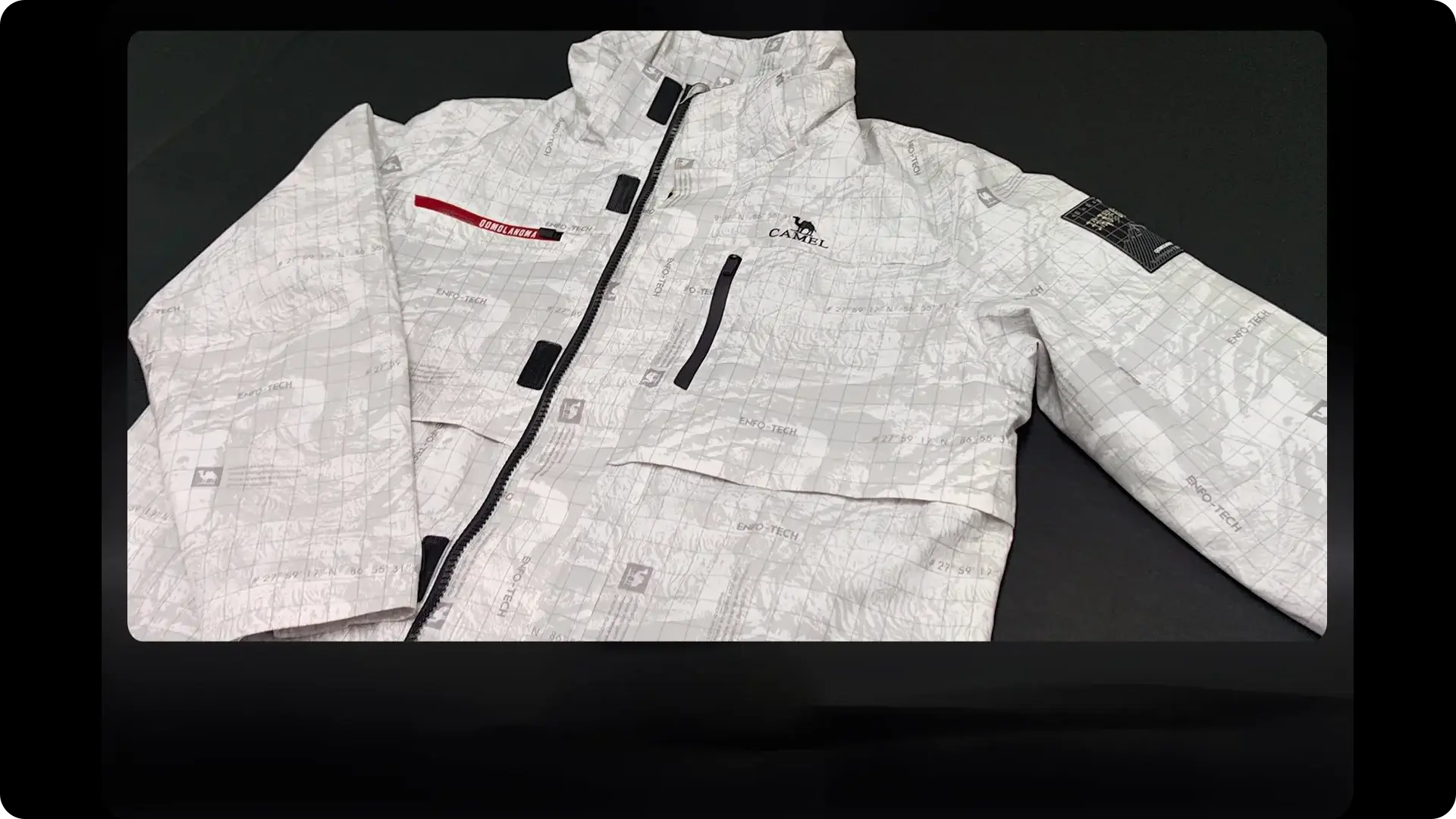
Cold-weather protection depends on more than a thick jacket or a wind-resistant surface. The outer shell faces wind, rain, snow, and abrasion, while the inner layers help limit heat loss and manage moisture next to the body. In well-designed thermal protective clothing, these components work as a coordinated system rather than independent materials.
Understanding their different functions helps garment developers create clothing that offers practical protection without unnecessary weight or restricted movement. Y-Warm’s thin insulation technology provides one example of how the inner thermal layer can contribute to this approach.
The Outer Shell: Protection Against Environmental Exposure
The outer shell forms the first barrier between the wearer and the surrounding environment. Its main responsibilities include resisting wind, shedding rain or snow, and withstanding everyday abrasion. Woven fabrics with dense constructions can reduce wind penetration, while water-repellent finishes or waterproof membranes help limit moisture entering the garment.
Wind resistance is particularly important because moving air can accelerate heat loss from the body. Even a garment with substantial insulation may feel inadequate if strong airflow passes through its outer layer. However, a shell that blocks too much moisture vapor can trap perspiration inside, creating discomfort during physical activity. Designers need to balance weather protection with breathability according to the intended use.
The shell also affects the durability and appearance of the finished garment. Reinforced areas may be useful around shoulders, elbows, and pockets, where friction is more likely. In workwear and outdoor applications, fabric strength, seam construction, and surface treatments should be assessed alongside weather resistance. These details influence how well thermal protective clothing performs under repeated exposure and regular use.
Inner Insulation: Reducing Heat Loss Without Excess Bulk
The primary function of insulation is to slow heat transfer from the body to the colder surroundings. Many conventional materials rely on loft, using fibers or other structures to trap relatively still air. Their performance can depend on thickness, density, moisture conditions, and how much the material is compressed during wear.
Bulky insulation is not always necessary for every application. Thin materials with suitable internal structures can provide thermal resistance while preserving garment flexibility and a closer fit. This can be valuable in protective clothing where workers need to bend, reach, operate equipment, or wear additional safety layers.
Y-Warm’s ultra-thin thermal insulation is specified at 0.7 mm thick, with an approximately 10° C increase in perceived warmth under specified test conditions. Its closed-cell structure is designed to reduce heat transfer without depending on bulky loft. This illustrates how a lightweight insulation layer can be considered within thermal protective clothing, although the finished garment’s performance still depends on shell properties, construction, fit, and test conditions.
How Shell and Insulation Work as One System
The relationship between the shell and insulation determines much of a garment’s overall performance. A wind-resistant outer layer can reduce convective heat loss, while the insulation slows heat transfer through the garment itself. If either component is poorly matched to the intended conditions, the wearer may experience cold spots, overheating, or moisture buildup.
Moisture management is a key part of this interaction. Perspiration can move from the skin through inner layers as vapor, but its escape depends on the permeability of the materials above it. If the shell restricts vapor transmission, moisture may accumulate inside the garment. Damp insulation can behave differently from dry insulation, and the wearer may feel colder after activity slows.
Layer arrangement also affects comfort. Insulation positioned between the shell and lining should remain evenly distributed, without excessive compression around seams or high-movement areas. Stitching, bonding, and lamination each influence how the layers move together. A well-planned construction allows the shell to provide environmental protection while the inner layer contributes warmth without making the garment unnecessarily stiff.
Matching Protective Clothing to Its Intended Environment
Different working and outdoor conditions call for different combinations of shell and insulation. Rainwear may prioritize waterproofing and moisture-vapor transmission, while cold-weather workwear may require greater wind resistance, abrasion protection, and thermal retention. Clothing intended for high physical activity also needs ventilation options to release excess heat.
Fit and mobility should be evaluated alongside material specifications. Tight garments can compress insulation and restrict movement, whereas overly loose designs may allow cold air to circulate. Adjustable cuffs, storm flaps, collars, and closures help reduce unwanted air entry, while articulated panels can support movement during demanding tasks.
Testing should reflect the conditions in which the garment will be used. Relevant assessments may include thermal resistance, water resistance, air permeability, moisture-vapor transmission, abrasion resistance, and seam strength. Field trials can then reveal how these properties interact during actual wear. The effectiveness of thermal protective clothing is best judged as a whole-garment outcome, not by the insulation or shell specification alone.
Conclusion
Reliable cold-weather protection comes from the relationship between the material facing the environment and the layers retaining body heat. Shell construction, insulation structure, moisture transfer, and garment fit each influence the result, so material selection needs to reflect the wearer’s real working or outdoor conditions.
Y-Warm develops thin thermal insulation technology for apparel, offering an approach that combines a compact profile with a closed-cell structure. Brands developing protective garments can learn more about Y-Warm’s material solutions and assess their suitability for specific clothing applications.
