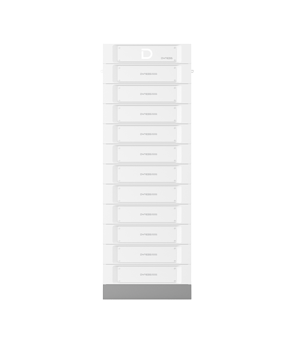
Determining the exact capacity parameters for a commercial facility requires a detailed evaluation of daily electrical load curves, grid constraints, and utility rate structures. Implementing a highly efficient stackable energy storage system allows enterprise operators to protect critical machinery, avoid peak demand penalties, and smooth out fluctuating solar generation.
Engineering localized microgrids dictates a balanced understanding of how physical configurations impact conversion ratios, site safety boundaries, and financial payback metrics over multi-decade lifecycles. Selecting appropriate equipment safeguards the underlying infrastructure while providing consistent electricity quality around the clock.
Analyzing Baseload Consumption Profiles and Operational Peaks
Small businesses frequently encounter significant operational cost increases due to brief spikes in energy usage caused by heavy machinery initialization or specialized cooling systems. Sizing a storage system begins with an accurate review of utility bills to map out precisely when these heavy load periods occur during the day. Failing to account for these specific peak intervals results in an under-configured array that fails to mitigate demand penalties.
Deploying a comprehensive Integrated C&I Energy Storage System layout helps regional installers manage these operational spikes by implementing automated peak shaving parameters. Local software tracking shifts facility reliance to stored battery assets instantly when building consumption crosses predefined network boundaries. Strategic load management lowers monthly operational overhead and enables effective business continuity.
The Role of Voltage Architecture in Mitigating Commercial Loss
Industrial-scale electricity distribution involves substantial currents that can place severe physical stress on standard building cables, switches, and sub-panels. Utilizing low-voltage configurations for large power requirements forces engineering crews to install heavy, costly copper cabling to reduce high thermal transmission resistance. These older infrastructure frameworks often introduce unnecessary energy conversion losses into the property network.
Conversely, utilizing elevated voltage pathways minimizes internal line current metrics, which fundamentally protects core component health and extends overall hardware lifecycles. Streamlined electrical designs bypass the need for heavy voltage step-up accessories, reducing balance-of-plant setup expenses for project development networks. Minimizing conversion losses enables the maximum volume of clean energy to remain readily usable.
By matching voltage architecture to site-specific load profiles, developers can strike an optimal balance between upfront cabling costs and long-term system efficiency, ensuring maximum return on investment.
Evaluating Spatial Constraints through Vertical Modular Layouts
Commercial real estate within mechanical corridors, equipment yards, or attached warehouses represents a premium asset that cannot be misallocated. Spreading stationary hardware modules horizontally across available floor spaces limits pedestrian walking pathways and easily triggers local zoning infractions. Engineering layouts must emphasize height over floor surface usage to preserve active commercial workspace zones.
Modern product designers resolve these strict dimensional hurdles by utilizing sophisticated, floor-standing tower enclosures that slide together securely. This vertical stacking framework creates a tidy, consolidated physical profile that simplifies building integration for structural engineering networks. Compact hardware deployment maintains necessary service clearances while ensuring maximum property aesthetic cohesion.
Understanding Thermal Stability and Chemical Safety Parameters
High-capacity battery installations placed inside or near active corporate zones demand rigid compliance with strict safety standards and stable chemical structures. Lithium iron phosphate formulations have established themselves as the industry safety benchmark for commercial stationary platforms due to their superior molecular resilience. Strong covalent atomic bonds prevent oxygen release and reduce common thermal runaway hazards under intense loads.
The commercial configurations developed by Dyness rely on this stable LFP framework to support operational security across varying load densities. Advanced internal protective monitoring layers track single-cell temperatures, localized voltage shifts, and current loads continuously to catch electrical anomalies early. Inherent chemical protection preserves corporate investments and surrounding physical property structures long after field commissioning.
Real-time diagnostics coupled with multi-tiered fault isolation allow any detected anomaly to trigger automatic shutdown of affected modules, containing risks before they propagate through the entire storage array.
Scalability Planning for Future Enterprise Power Demands
Enterprise power demands rarely stay fixed, often expanding rapidly as facilities install electric fleet charging hubs, automated machinery, or extra production lines. A rigid, unalterable stationary power unit limits expansion options, forcing complete system replacements when local load demands grow. Flexible modular architecture addresses this issue by supporting simple, step-by-step capacity scaling over time.
For example, the Dyness STACK100 series provides a highly adaptable base configuration scaling from 15.36kWh to 76.8kWh per single tower. For larger operations, the architecture supports deep parallel expansion options that are max expandable to 921.6kWh to manage extensive industrial loads. This flexible stackable energy storage system path allows companies to begin with a smaller initial configuration and scale capacities later as localized needs increase.
Conclusion
Successfully organizing an Integrated C&I Energy Storage System depends on analyzing real-time building load profiles, selecting high-voltage architectures, and maintaining modular expansion pathways. Utilizing advanced platforms like the Dyness STACK100 series, which scales from 15.36-76.8kWh and is max expandable to 921.6kWh, provides an exceptionally secure and hassle-free power scaling option.
Partnering with a flexible manufacturing entity enables distribution networks to deliver highly tailored, low-maintenance, and climate-resilient energy assets to the global commercial market.
