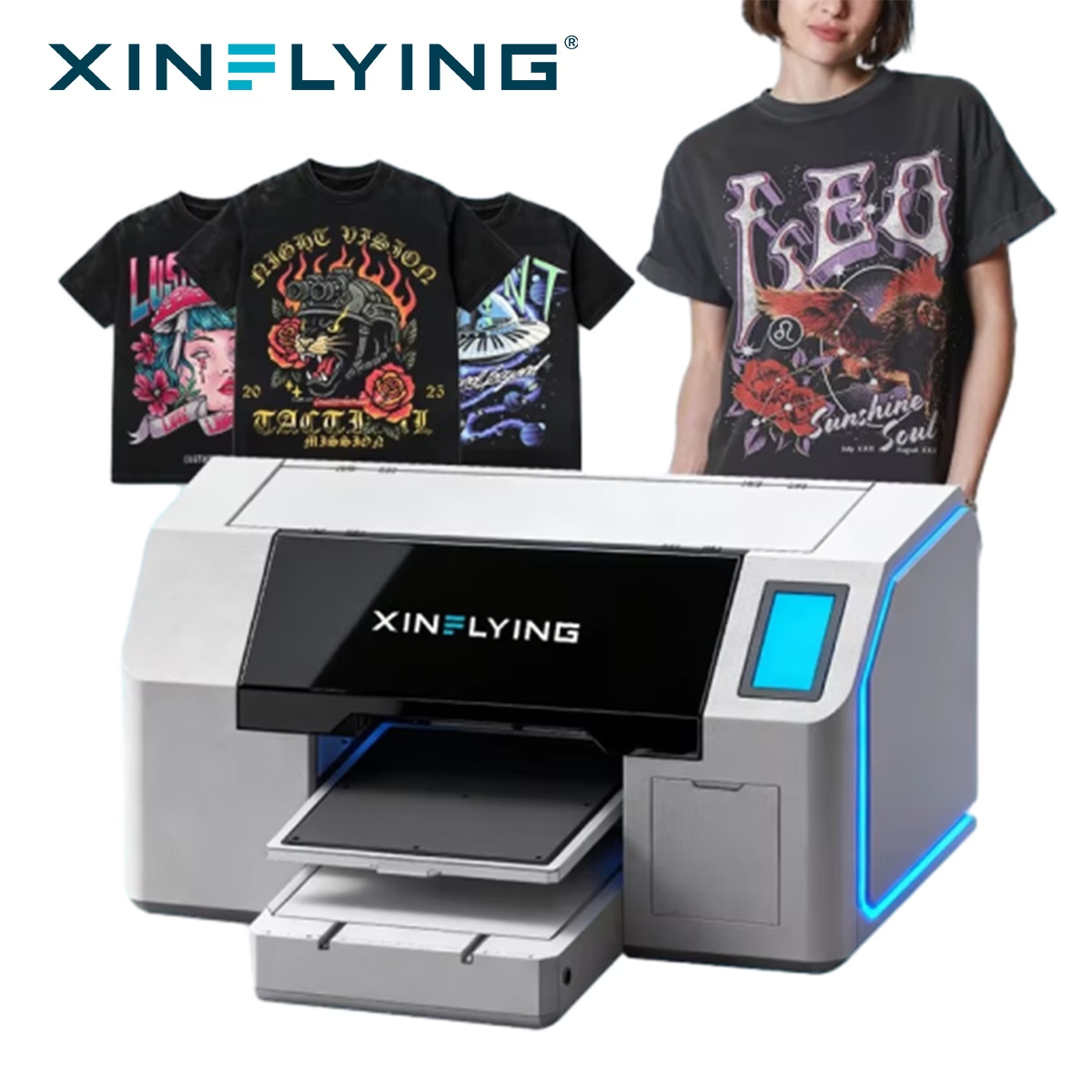
White ink is one of the most demanding parts of direct-to-garment production. Its role is essential for creating vibrant graphics on dark garments, but its characteristics also make ink management especially important for commercial printing operations. Businesses using a DTG printing machine need a workflow that keeps white ink consistent while protecting printheads from clogging and unnecessary wear. Proper equipment selection and daily operating practices can therefore have a direct effect on print quality, maintenance requirements, and production efficiency.
Why White Ink Management Matters on a DTG Printing Machine
White ink contains pigment that can settle when it remains stationary for extended periods. If the ink concentration becomes inconsistent, the printer may experience unstable white output, reduced coverage, or nozzle-related problems. These issues can become costly when they result in repeated cleaning cycles, wasted garments, or production interruptions.
For business garment printing operations, white ink management should therefore be treated as part of the production process rather than an occasional maintenance task. A system that keeps white ink moving and maintains a more consistent ink condition can help reduce the risks associated with pigment precipitation.
Xinflying addresses this challenge with a magnetic white ink mixing system on the XF-DTG-10 I3200 A1 T-Shirt DTG Printer. The system is designed to avoid and alleviate the precipitation of coloring materials in white ink, helping reduce the risk of ink clogging.
Use White Ink Circulation to Support Consistent Output
A dedicated white ink circulation system can simplify one of the most important maintenance concerns in DTG production. Xinflying’s DTG printer range describes automatic white ink circulation as a technology designed to reduce the risk of ink precipitation, reduce ink waste, lower operating costs, and maintain consistent ink concentration for stable printing output.
For production teams, this feature is particularly relevant when white ink is used frequently across dark garments. Consistent ink conditions can help the printer deliver more predictable white layers, while reducing the likelihood that operators need to respond to settling-related problems during busy production periods.
However, circulation should complement rather than replace routine maintenance. Operators should still follow the ink manufacturer’s handling recommendations and the printer manufacturer’s maintenance procedures.
Choose a Printhead Designed for Reliable Production
Printhead selection is another important factor in long-term DTG performance. The XF-DTG-10 uses two Epson i3200-A1 printheads. The machine uses environmentally friendly pigment ink and supports a CMYK+W configuration, with an optional configuration also listed by Xinflying.
Epson identifies the I3200-A1 as a PrecisionCore MicroTFP printhead with 3,200 nozzles, eight nozzle rows, and a resolution of 300 npi per row or 600 npi with two rows. Epson also describes the printhead as designed for high durability, while noting that actual durability can be affected by ink, environment, printing conditions, and maintenance practices.
This distinction is important for buyers evaluating a Xinflying DTG printer manufacturer. Printhead specifications provide a technical foundation, but long-term performance depends on how the complete ink delivery and maintenance system is operated.
Control the Printing Environment
Environmental conditions can influence ink behavior and machine stability. Xinflying specifies an operating temperature range of 20–28°C and relative humidity of 35%–65% RH for the XF-DTG-10. Keeping the production area within the manufacturer’s recommended conditions provides a more controlled environment for consistent operation.
Businesses should also avoid placing the machine where dust, excessive airflow, or unstable environmental conditions can interfere with routine production. A clean and controlled workspace makes maintenance easier and can help operators identify developing print-quality problems earlier.
Reduce Unnecessary Printhead Stress
Printhead longevity is not simply a matter of purchasing a durable printhead. Daily operating habits also matter. Excessive cleaning, prolonged periods of inactivity, incorrect ink handling, and failure to address early nozzle issues can increase maintenance demands.
Operators should establish a consistent maintenance routine based on actual production schedules. Before starting a production run, checking print quality can help identify missing nozzles or uneven white coverage before multiple garments are printed.
The goal is not to clean the printhead as often as possible. Instead, maintenance should be performed appropriately according to machine requirements and observed print conditions. This approach can help balance print quality, ink consumption, and printhead service life.
Match Machine Capacity to Business Needs
Printhead care also needs to be considered alongside overall production requirements. The XF-DTG-10 provides a 400 × 500 mm print format and supports a maximum medium thickness of 25 mm. Xinflying lists productivity at 6-pass mode as 45 A4 pieces per hour and 23 A3 pieces per hour.
These specifications make the machine relevant to small and medium garment businesses, custom apparel operations, and on-demand production environments. Its dimensions are 1100 × 1080 × 580 mm, while the listed net weight is 108 kg. Such details should be considered when planning installation space and production workflow.
Build a Maintenance Routine Around White Ink
A practical maintenance strategy combines equipment features with disciplined operation. Businesses should monitor white ink condition, inspect printed output, follow appropriate startup and shutdown procedures, and respond promptly when print quality changes.
The XF-DTG-10’s magnetic white ink mixing system provides an equipment-level approach to managing pigment precipitation. Combined with Epson i3200-A1 printheads and a controlled operating environment, it gives production teams a foundation for maintaining consistent DTG output.
For buyers comparing a DTG printer manufacturer such as Xinflying, the broader lesson is that white ink management should be evaluated as part of the entire printing system. A machine that addresses ink circulation, printhead technology, operating conditions, and production requirements can offer a more practical approach to long-term operation.
Turning White Ink Control into Production Stability
Effective white ink management is essential for businesses that depend on consistent DTG printing quality. Reducing the risk of pigment precipitation, maintaining suitable environmental conditions, monitoring print quality, and following structured maintenance procedures can all contribute to more reliable production.
The XF-DTG-10 combines automatic pretreatment and high-resolution DTG printing in one compact system, while its magnetic white ink mixing system specifically addresses a common white-ink management challenge. With two Epson i3200-A1 printheads, a 400 × 500 mm print format, and published 6-pass productivity figures, it provides a practical equipment option for businesses evaluating a DTG printing machine for commercial garment production.
Ultimately, printhead longevity comes from more than hardware alone. The combination of suitable equipment, controlled ink management, correct operating conditions, and consistent maintenance is what helps businesses protect print quality and maintain productive DTG operations over time.
