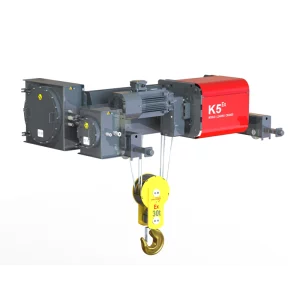
Bulk material handling operations often involve continuous lifting, transferring, and positioning of heavy or loose materials. When equipment cannot keep pace with the required workflow, delays can occur at storage areas, loading points, processing stations, and transportation interfaces. These demands make it important to consider how different crane components work together to support reliable and efficient material handling.
From drive systems and end carriages to lifting equipment and controls, every component contributes to how efficiently a crane performs. For facilities that handle bulk materials regularly, evaluating the complete lifting system can help reduce bottlenecks, improve operational control, and support safer working conditions.
Understanding Common Bottlenecks in Bulk Material Handling
Bottlenecks can develop for several reasons. A crane may have sufficient lifting capacity but operate too slowly for the required production cycle. Alternatively, unsuitable attachments may make positioning difficult, forcing operators to spend additional time adjusting loads.
Storage layout can also affect crane efficiency. When material must travel unnecessary distances between storage and processing areas, each lifting cycle becomes longer. Equipment downtime is another concern, particularly when frequently used components require unexpected repairs or replacement.
A bulk material handling crane should therefore be evaluated according to the actual workflow rather than capacity alone. Understanding load characteristics, lifting frequency, travel distance, operating environment, and required positioning accuracy provides a more practical basis for equipment selection.
Selecting Crane Components Based on Actual Operating Conditions
The performance of a crane depends on how its individual components work together. Gearmotors, for example, influence crane travel and load positioning. The appropriate combination of motor and gearbox characteristics can support controlled movement while matching the operating requirements of the facility.
End carriages are equally important because they support crane travel along the runway. Their configuration should correspond with the crane structure, expected load, travel requirements, and operating frequency. If movement is inconsistent or poorly matched to the application, material transfer can become less efficient.
Lifting attachments also require careful consideration. Different bulk materials may require different methods of engagement and positioning. Choosing equipment according to material type, load dimensions, weight distribution, and handling frequency can help reduce unnecessary adjustments during lifting cycles.
WORLDHOISTS offers a range of crane components, including gearmotors, end carriages, crane kits, lifting attachments, and electrical and electronic systems for different lifting applications.
Optimizing Overhead Crane Movement for Bulk Lifting
An overhead crane for bulk lifting can help organize material movement by using overhead space rather than relying entirely on floor based transportation. This can be particularly useful in facilities where floor space is limited or where forklifts and other vehicles would interfere with material flow.
However, overhead movement only improves efficiency when crane travel is properly coordinated with the rest of the operation. Excessive travel distances, unnecessary stops, or slow positioning can create hidden delays across repeated lifting cycles.
A practical approach is to examine the complete movement sequence. How far does the crane travel for each load? How frequently does it stop? How much time is spent positioning the attachment? Are operators required to make repeated corrections? These questions can reveal whether a component upgrade or system adjustment could improve workflow.
Modern electrical and electronic systems can also support more controlled crane operation. Depending on the application, improved control functionality can help operators manage lifting and travel movements more consistently.
Matching Equipment to Bulk Material Storage Requirements
Storage conditions have a direct effect on lifting equipment requirements. Materials stored in high density areas may require precise positioning, while open storage environments may place greater emphasis on travel distance and cycle time.
A crane for bulk material storage should therefore be selected with the storage configuration and material characteristics in mind. Load capacity is only one consideration. The required lifting height, horizontal travel, duty cycle, attachment type, and available workspace also need to be evaluated.
For facilities handling materials with different weights or dimensions, equipment flexibility may also be important. A system that can accommodate the expected range of loads can reduce the need for separate handling processes and help maintain a consistent workflow.
WORLDHOISTS provides hoisting and lifting equipment together with crane components and control systems, giving facilities options when developing new lifting systems or upgrading existing equipment.
Improving Reliability Through Preventive Maintenance
Even well selected crane components require regular inspection and maintenance. Components that experience frequent movement or repeated loading can gradually develop wear, which may affect crane performance and increase the likelihood of unplanned downtime.
Maintenance teams should pay attention to changes in operating behavior, including unusual sounds, irregular travel, reduced lifting performance, or visible component wear. Identifying these issues early can help prevent minor problems from becoming larger operational interruptions.
Replacement planning is also worth considering. Frequently used components should be assessed for availability and compatibility before an urgent failure occurs. Keeping suitable replacement parts accessible can shorten maintenance periods and help restore equipment to service more quickly.
Supporting Smarter Material Movement With WORLDHOISTS
Efficient bulk handling depends on reliable movement from one stage of the operation to the next. The right crane components can help reduce unnecessary delays, improve load positioning, and support a more organized lifting workflow.
WORLDHOISTS offers a range of products for hoisting and crane applications, including crane kits and lifting attachments, gearmotors, end carriages, and electrical and electronic systems. By evaluating component compatibility alongside actual operating requirements, facilities can develop lifting solutions that support productivity, maintenance planning, and safe material handling over the long term.
